
Last reviewed: May 18, 2026.
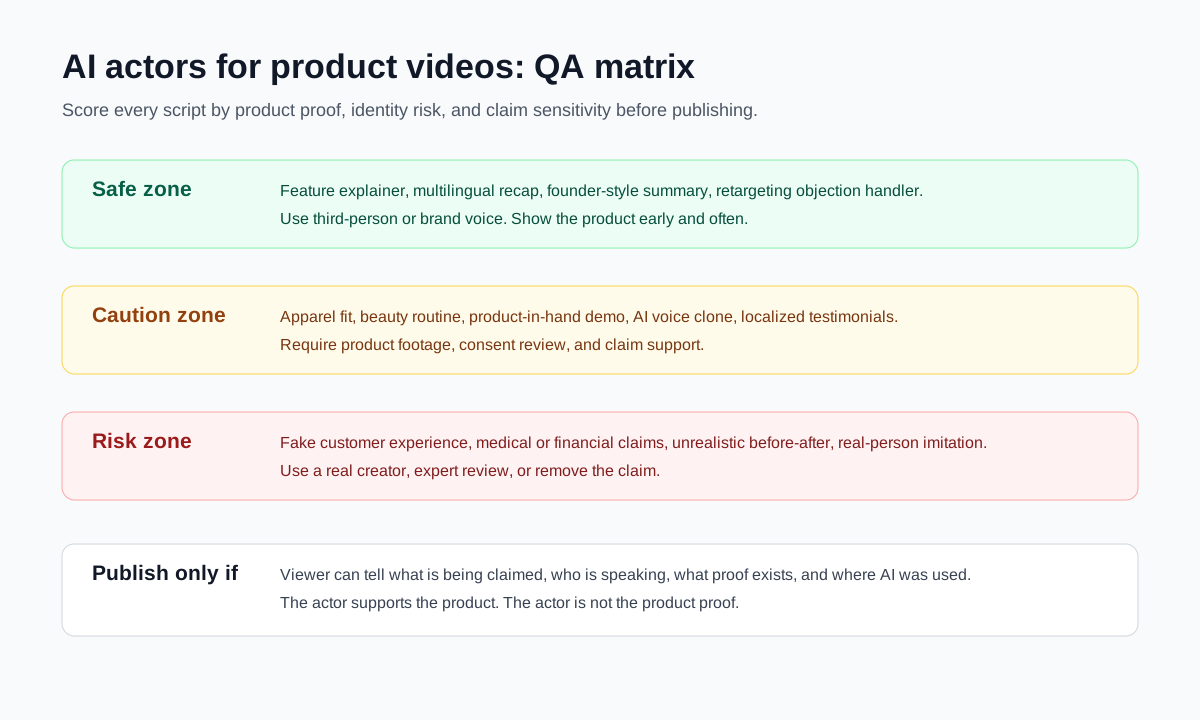
Quick Answer
AI actors are useful in ecommerce product videos when they act as presenters: explaining a feature, introducing a product, localizing a script, summarizing a product page, or handling a simple buyer objection. They become risky when the video makes them look like real customers, real experts, real founders, or people with personal product experience they do not actually have.
For most ecommerce brands, the safest rule is: use AI actors to explain, not to testify. The product, real footage, real reviews, documented facts, or real creators should carry the proof.
If your video also needs voice selection, consent, pronunciation, or multilingual review, pair this guide with ShopShot's AI voiceover options in UGC video tools. For fashion-specific creative, read the AI fashion video generator guide.
What an AI Actor Actually Does in a Product Video
An AI actor is a synthetic presenter, avatar, or generated human-like character that appears in a video and delivers a script. In ecommerce, AI actors are often used to create talking-head ads, spokesperson-style clips, UGC-style intros, localized product explainers, or short retargeting videos.
That does not mean the AI actor has used the product. It does not mean the actor is a real customer. It does not mean the actor can make an endorsement claim. This distinction matters because ecommerce product videos sit close to advertising, testimonials, influencer marketing, and product claims.
The FTC's endorsement guidance and consumer review rule both point in the same direction: marketers should not mislead consumers about endorsements, testimonials, identity, or product experience. TikTok also provides ad disclaimer options for AI-generated, synthetic, or manipulated media, and TikTok's broader AI-generated content guidance focuses on labeling realistic AI-generated image, audio, or video. Meta has also been adding transparency labels for ads created or significantly edited using its own generative AI creative features. These policies do not mean every AI actor video is banned; they mean ecommerce teams need a review process before publishing.
Best Ecommerce Use Cases for AI Actors
| Use case | Good fit? | Why it works | What to check |
|---|---|---|---|
| Product feature explainer | Strong | The actor can introduce what the product does | Product visuals must confirm the claim |
| Multilingual product recap | Strong | One script can be adapted to multiple markets | Native pronunciation and cultural review |
| Founder-style announcement | Moderate | Useful when the real founder cannot record every variant | Do not imply the AI actor is the founder |
| Retargeting objection handler | Strong | Short scripts can answer price, fit, shipping, or material questions | Keep claims grounded in the product page |
| UGC-style hook test | Moderate | Fast way to test openings before creator production | Do not fake customer experience |
| Customer testimonial | High risk | Testimonial claims require real experience | Use real customers or remove the testimonial framing |
| Expert recommendation | High risk | Expertise and endorsement are sensitive | Use a real expert or avoid expert identity |
Where AI Actors Are Usually Weak
AI actors can make a product video feel more human, but they can also create false confidence. Be careful in categories where buyers need to see real physical use or personal experience.
| Category | Why AI actor output is risky | Safer alternative |
|---|---|---|
| Skincare and beauty results | Before-after, skin response, and personal results need evidence | Real demo, ingredient explainer, dermatologist-reviewed copy where appropriate |
| Wellness and supplements | Claims can become health claims quickly | Claim-safe product explainer and legal review |
| Baby and pet products | Trust and safe-use context matter | Real product handling with clear instructions |
| Apparel fit | Size, movement, fabric, and body fit need real proof | Model footage, try-on video, size chart overlay |
| Fitness equipment | Physical performance needs real demonstration | Real user demo or controlled product footage |
| High-ticket electronics | Buyers need interface, scale, compatibility, and setup proof | Product close-ups, screen captures, real hands-on footage |
The pattern is consistent: if the buyer's objection depends on real-world use, the AI actor should not be the main evidence.
The Safe AI Actor Script Map
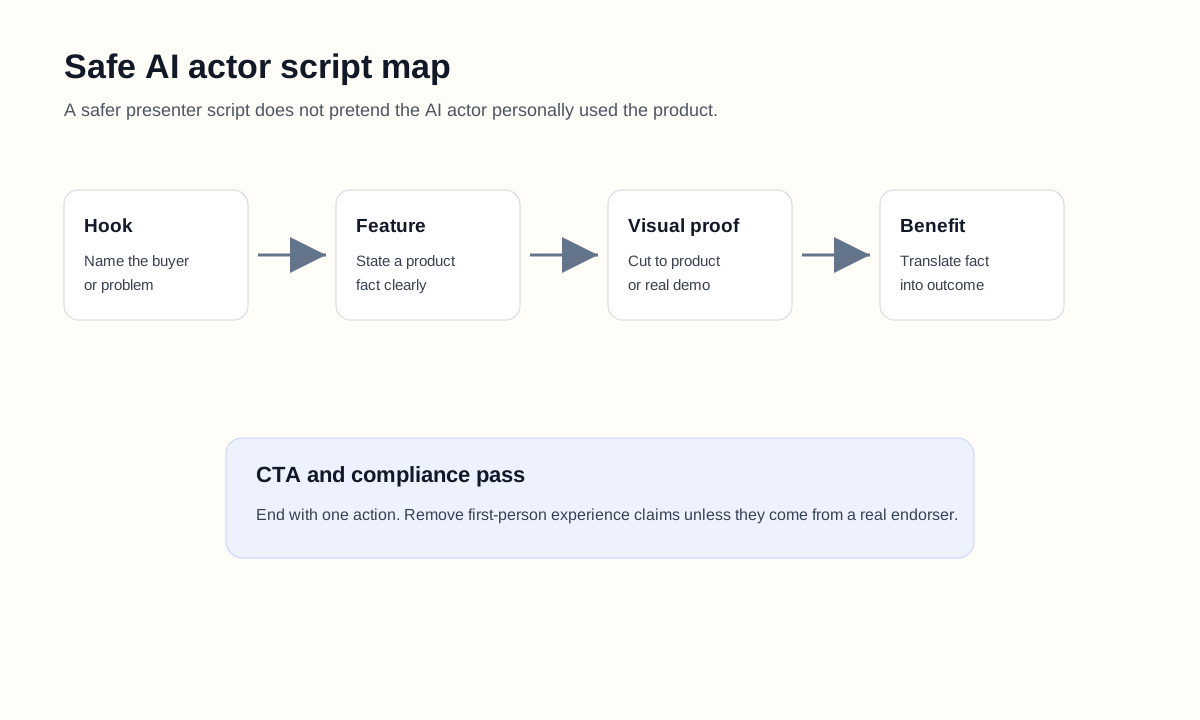
A safe AI actor script usually has five parts:
-
Buyer or problem hook.
Name the buyer situation without pretending the actor experienced it. Example: "If your desk is too crowded for a bulky lamp, look for this kind of fold-flat design." -
Product fact.
State a feature that can be verified. Example: "This lamp has three brightness modes and folds flat when not in use." -
Product visual proof.
Cut away from the actor and show the actual product, packaging, close-up, dimensions, app screen, texture, or use case. -
Supportable benefit.
Translate the feature into a buyer benefit without exaggeration. Example: "That makes it easier to move from a work desk to a bedside table." -
One CTA.
Ask for one action: compare colors, see the product page, check dimensions, or shop the offer.
This format keeps the AI actor as a guide. The proof still belongs to the product.
Safer vs Riskier Script Lines
| Riskier line | Why it is risky | Safer replacement |
|---|---|---|
| "I used this for two weeks and loved it." | Implies personal experience | "This video highlights the product features shoppers usually compare first." |
| "My dermatologist recommends this." | Implies expert endorsement | "Check the ingredient list and product details before choosing a skincare routine." |
| "This fixed my back pain." | Health outcome claim | "The cushion is designed to support a more comfortable seated position." |
| "I bought this for my baby." | Implies real parent experience | "Parents often compare safety, cleaning, and setup details before buying." |
| "This is the best product on Amazon." | Unsupported superiority claim | "Compare the size, materials, and reviews before deciding." |
| "I am the founder of this brand." | False identity risk if not true | "Here is a quick product walkthrough from the brand." |
Product Proof Should Outrank the Actor
A common weakness in AI actor product videos is over-reliance on the face. The person talks, the captions move, the background looks polished, but the product barely appears. That is weak ecommerce creative.
For product videos, plan product proof before writing the actor script:
| Product proof asset | What it can support |
|---|---|
| Product close-up | Material, texture, size, finish, ports, buttons |
| Product-in-use footage | Setup, handling, scale, movement, before-after process |
| Review snippet | Real buyer language, but do not fabricate review claims |
| Product page facts | Dimensions, ingredients, compatibility, included items |
| Comparison shot | Size, storage, speed, packaging, feature difference |
| Screen capture | App workflow, setup steps, settings, dashboard |
| Unboxing shot | Included accessories, packaging, first-use clarity |
If you do not have enough proof assets, use the AI actor for a short intro and keep the video mostly product-led.
QA Checklist Before Publishing AI Actor Product Videos
| QA question | Pass condition |
|---|---|
| Does the actor appear to be a real customer? | No, unless it is a real customer with consent and truthful experience. |
| Does the script imply personal use? | No first-person usage claims from synthetic actors. |
| Is the product shown clearly in the first few seconds? | Yes, especially for paid social and product page videos. |
| Are all claims supported by the product page, documentation, or real proof? | Yes. Unsupported performance or health claims are removed. |
| Are subtitles accurate? | Yes, including numbers, claims, prices, and product names. |
| Is AI disclosure needed for the platform or market? | Reviewed before launch. |
| Does the video fit the placement crop? | Text, face, and product are not cut off in 9:16, 1:1, or 16:9. |
| Does the voice sound natural for the target market? | Pronunciation, accent, tone, and pacing reviewed. |
| Are rights and consent clear? | No real person likeness, voice clone, or protected asset is used without permission. |
Example Workflow: Portable Projector Product Video
Imagine a Shopify store selling a portable mini projector. The product page includes product images, dimensions, ports, a brightness claim, compatible devices, and customer reviews about dorm rooms and travel.
Weak AI actor version:
- Actor says, "I took this projector on every trip and it changed movie night."
- Product appears only once.
- No ports, size, setup, or compatibility are shown.
- The video implies personal use from a synthetic presenter.
Stronger version:
- Hook: "Need a projector that fits in a backpack?"
- Product fact: "This model weighs under the listed product weight and connects through HDMI and USB."
- Visual proof: close-up of ports, hand scale, carrying pouch, room setup.
- Use case: dorm room, hotel room, bedroom wall.
- CTA: "Check the product page for brightness, size, and compatibility."
The stronger version uses the AI actor as a narrator, not the evidence.
How AI Actors Fit Into the Product Video Stack
AI actors should be one creative component, not the whole strategy.
| Component | AI actor role | Better proof source |
|---|---|---|
| Hook | Can deliver a clear opening line | Product visual, buyer problem, text overlay |
| Explanation | Strong for feature narration | Product page facts and demonstration |
| Testimonial | Weak and risky | Real customer review or creator clip |
| Product handling | Limited | Real hands, creator footage, brand footage |
| Localization | Strong for translated presenter versions | Native language review |
| Retargeting | Strong for objection handling | Review snippets, offer details, feature comparison |
For UGC-style creative planning, connect this to UGC scripts for product ads. For production economics, compare against UGC video production tools pricing.
Common Mistakes
- Making the AI actor the hero instead of the product.
- Writing first-person testimonial lines for a synthetic presenter.
- Using a realistic face but no disclosure review.
- Publishing generated product visuals that do not match the actual SKU.
- Letting the actor say claims the product page does not support.
- Using the same avatar for every product, which makes the brand feel generic.
- Ignoring voiceover quality, especially for multilingual ads.
Recommended Content Structure for AI Actor Ads
For most ecommerce product videos, use this structure:
| Time | Content | Purpose |
|---|---|---|
| 0-2 seconds | Product or problem hook | Stop the scroll |
| 2-5 seconds | AI actor explains the situation | Add human guidance |
| 5-10 seconds | Product proof shots | Build trust |
| 10-14 seconds | One supportable benefit | Make the product easy to understand |
| 14-18 seconds | CTA and offer | Move viewer to product page |
Avoid keeping the camera on the actor for the entire video. Ecommerce buyers need visual proof.
FAQ
Can I use AI actors in product videos?
Yes. AI actors can present product explainers, localized scripts, retargeting messages, and simple feature summaries. The safest use is a presenter role, not a fake customer or fake expert role.
Are AI actors good for UGC ads?
They can help test UGC-style scripts, but they should not replace real product experience in categories where trust depends on physical use, personal results, or sensitive claims.
Do AI actor product videos need disclosure?
Disclosure requirements depend on the platform, market, media type, and whether the content could mislead viewers about identity, endorsement, or AI-generated media. Review TikTok, Meta, FTC, and local rules before publishing.
What is the safest AI actor script format?
Use an explainer format: buyer problem, product fact, product visual, supportable benefit, CTA. Avoid first-person statements like "I used this" unless the speaker is a real endorser.
Should the AI actor appear before the product?
Usually no. For ecommerce ads, show the product or buyer problem early. The AI actor can explain after the viewer understands what is being sold.
Sources Checked
- FTC Endorsement Guides: What People Are Asking
- FTC Consumer Reviews and Testimonials Rule Q&A
- FTC final rule banning fake reviews and testimonials
- TikTok Newsroom: labels for AI-generated content
- TikTok Ads Manager: ad disclaimers
- Meta: Expanding GenAI transparency for ads products
- ShopShot internal planning files:
seo_article_plan_latest_competitor_keywords_2026-05-11.mdandpseo-interface-plan-ugc-video-tools.md