Quick Answer
Use TikTok Spark Ads for product videos only after the post has already earned trust signals and passes four checks: the product is shown clearly, the creator or account authorization is documented, the commercial relationship is disclosed, and the product page or TikTok Shop path is ready to measure sales. Spark Ads can amplify an organic post, but they do not fix a weak hook, unsupported claim, missing usage rights, or confusing offer.
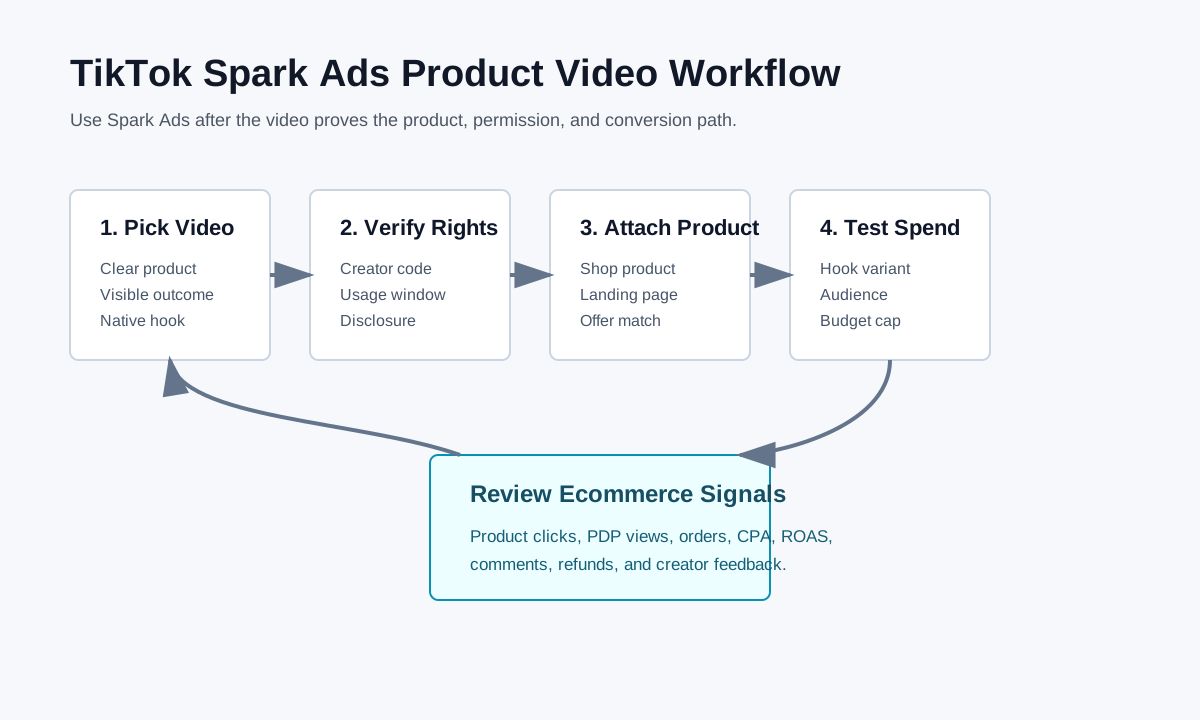
For ecommerce teams, the best workflow is simple: build or collect several short product videos, publish the strongest ones organically, watch which hooks attract real saves/comments/clicks, then boost only the winners as Spark Ads. If you need more product-video angles before testing, use an AI video generator or the TikTok Shop product video checklist to prepare usable creative before ad spend starts.
What TikTok Spark Ads Are
TikTok describes Spark Ads as a native ad format that lets advertisers use organic TikTok posts and keep the engagement attached to those posts. A Spark Ad can come from your own account, a linked business account, or a creator post that has been authorized for advertising.
That makes Spark Ads different from a normal uploaded ad. The creative looks and behaves more like a TikTok post because the post identity, comments, shares, likes, and profile interaction stay attached to the original content. For product videos, that can be useful when the best proof is already inside the organic post: a creator reaction, a customer-style demo, a TikTok Shop product tag, or a comment thread answering buyer objections.
Spark Ads are not automatically better than standard ads. They work when the original post already feels credible and the paid campaign has a clean conversion path. If the video is vague, the caption is messy, or the creator never shows the actual product result, paid distribution will usually make those problems more expensive.
When Spark Ads Fit Ecommerce Product Videos
Spark Ads are strongest when the video has native proof that a polished studio ad would struggle to fake. Use them for creator demos, founder videos, TikTok Shop videos, customer-style explainers, and product problem-solution clips.
| Product video situation | Spark Ads fit? | Why |
|---|---|---|
| Creator shows the product in use and answers a real objection | Strong | The creator identity and comment context can reinforce trust. |
| Brand post demonstrates a feature with clear before/after proof | Strong | The organic post can be boosted while preserving engagement. |
| AI-assisted video uses a fictional presenter but no real claim | Moderate | Use only if disclosure and product proof are clear. |
| Generic product montage with music and no hook | Weak | A standard ad or a new edit is usually better. |
| Creator post makes a claim you cannot substantiate | Do not use | Paid amplification increases compliance and refund risk. |
If your team is still looking for hooks, start with UGC video hooks for product ads before choosing what to boost. If the issue is platform formatting, check TikTok ad specs for ecommerce product videos before you publish the organic post.
The Four-Gate Spark Ads Preflight
Before you put budget behind a product video, run the post through these four gates.
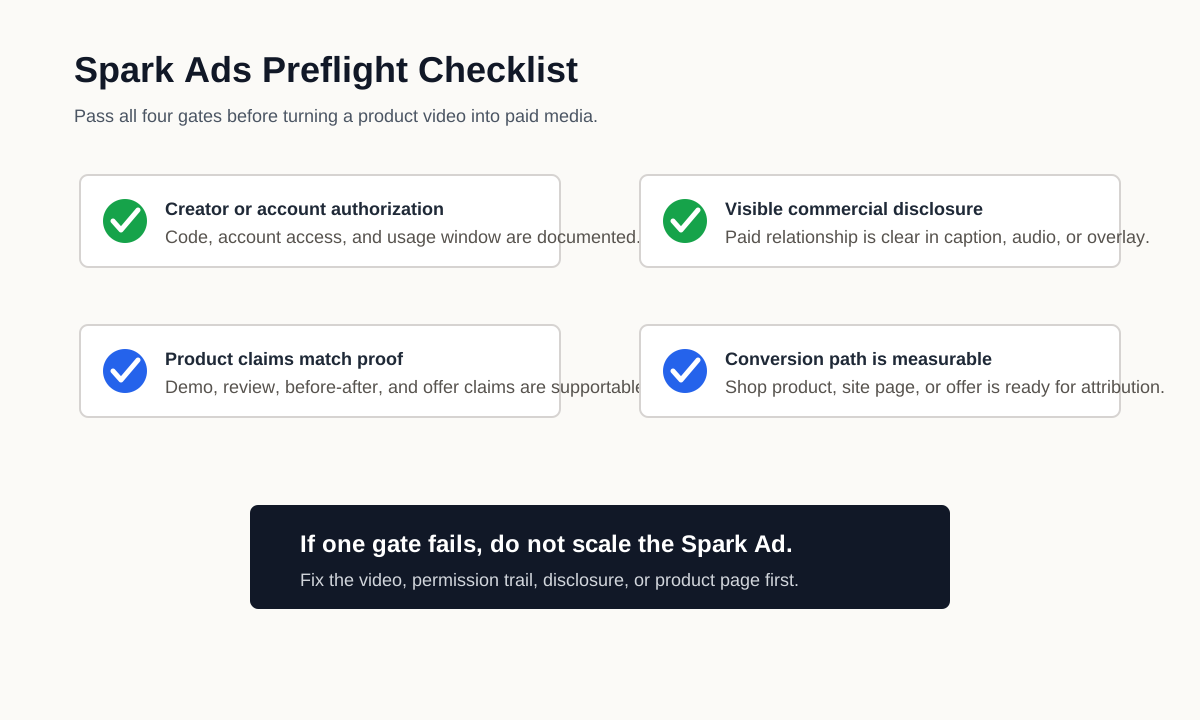
Gate 1: Product Proof
The first gate is the product itself. The video should show what the product is, who it is for, what changes after using it, and what the buyer should do next. A Spark Ad is not a place to hide the product behind lifestyle filler.
Check for these signs:
- The product appears within the first three seconds.
- The hook names a problem, desire, or shopper situation.
- The demo is visible enough to understand on mute.
- The result is tied to the specific product, not a generic category claim.
- The caption or voiceover supports the same promise as the video.
For AI-generated or AI-assisted clips, keep the claim even tighter. Use ShopShot or another editor to show the product, packaging, key feature, and CTA clearly, but avoid implying a real customer used the item if the clip is fictional.
Gate 2: Authorization Trail
TikTok supports several Spark Ads authorization paths, including authorized TikTok accounts, linked business accounts, and individual video codes for posts. The right method depends on whether the post belongs to your own account, a creator, or an account connected through Business Center.
For a creator post, document more than the code. Save the creator handle, post URL, authorization method, usage window, allowed products, allowed markets, and whether the creator can revoke access. A code lets you run the ad inside TikTok, but your contract or written approval should also explain what the brand is allowed to do with the content.
This is especially important for ecommerce brands using multiple products. Do not use a creator's video for a different SKU, bundle, or offer unless the permission clearly covers that use. If you need a broader checklist, review the UGC usage rights checklist for ecommerce ads.
Gate 3: Disclosure and Claim Safety
Spark Ads can make paid content feel native. That is the point, but it also raises disclosure risk. The FTC's influencer guidance emphasizes that material connections between a creator and brand should be disclosed clearly. For Spark Ads, assume the relationship needs to be obvious before the viewer makes a purchase decision.
Use clear language such as "ad," "paid partnership," "sponsored," or platform disclosure tools where available. Avoid burying disclosure after a stack of hashtags. If the creator says "I bought this myself," "my honest review," or "this cured my problem," verify that the statement is true and supported before boosting the post.
Also check product category risk. Beauty, supplements, health-adjacent products, children's products, and financial claims need stricter review than a phone stand or kitchen organizer. If the video cannot pass a legal or policy review, it should not become a Spark Ad.
Gate 4: Conversion Path
The final gate is measurement. A Spark Ad can send traffic to TikTok Shop, a showcase, an app, or a website depending on your campaign setup and market availability. TikTok's Shop Ads guidance has also shifted toward GMV Max for TikTok Shop sales campaigns, so ecommerce teams should confirm the current route before building a testing plan.
Ask these questions:
- Does the promoted post link to the exact product shown?
- Is the price, offer, variant, and shipping promise consistent with the video?
- Can you separate Spark Ads performance from organic performance?
- Are product clicks, PDP views, orders, CPA, ROAS, and refunds visible?
- Do comments reveal confusion that should be fixed before scaling?
If you cannot answer those questions, run a smaller validation test first. The ecommerce video ad testing plan gives a broader structure for deciding when to scale, pause, or rewrite a video.
Spark Ads Product Video QA Table
Use this table before campaign setup. A video should pass the "required" rows before it gets budget.
| QA item | Required? | Pass standard |
|---|---|---|
| Product appears early | Yes | Viewer can identify the product in the first three seconds. |
| Hook matches the buyer problem | Yes | The opening line names a use case, objection, or result. |
| Authorization is documented | Yes | Account access or video code is saved with usage terms. |
| Disclosure is clear | Yes | Paid or material relationship is understandable to viewers. |
| Claim is supportable | Yes | Demos, reviews, and before/after claims have evidence. |
| Product link matches video | Yes | The ad destination sells the exact SKU or bundle shown. |
| Caption is final | Yes | No typo, missing disclosure, or wrong offer before authorization. |
| Comments are monitored | Recommended | Team can answer buyer questions and flag claim confusion. |
| Organic signal exists | Recommended | The post already has useful saves, comments, CTR, or watch data. |
| Variant plan exists | Recommended | You know what hook, offer, or angle to test next. |
How to Prepare Product Videos Before Spark Ads
Spark Ads selection should start before the ad account. Build a small batch of product videos first, then use organic response to decide which one deserves paid support.
1. Pick One Product and One Buyer Objection
Do not start with "make a TikTok ad." Start with the buyer objection. Examples:
- "Will this fit in a small apartment?"
- "Does it work on textured hair?"
- "Is the setup difficult?"
- "Will the material feel cheap?"
- "Can I use this for travel?"
One product video should answer one objection. A Spark Ad that tries to explain every feature usually loses the native feel that makes the format useful.
2. Choose the Right Post Type
Choose the format that fits the proof you need.
| Format | Best for | What to avoid |
|---|---|---|
| Creator demo | Trust, fit, texture, real handling | Over-scripted claims that sound like a brand brief. |
| Founder demo | Technical explanation, margin-sensitive products | Talking too long before showing the product. |
| AI presenter or AI-assisted clip | Fast variants, fictional scenario, product recap | Fake testimonial language or unclear disclosure. |
| Customer-style FAQ | Objection handling and retargeting | Unsupported medical, safety, or earnings claims. |
| Product montage | Visual variety and fast offer testing | No reason to believe or buy. |
ShopShot can help turn product images, product page details, and ad copy into short product-video variants. After generation, review each clip against the checklist instead of publishing every output.
3. Write the Caption Before Authorization
TikTok's Spark Ads guidance notes that captions may not be editable after a post is authorized as an ad. Treat the caption as final before you request authorization or link the post to a campaign.
A good ecommerce caption should include:
- A clear product context.
- A concise commercial disclosure where needed.
- One product or offer, not several.
- A CTA that matches the destination.
- No unsupported superlatives such as "guaranteed," "miracle," or "best ever" unless substantiated.
4. Watch Organic Comments Before Spending
The comment section is a useful pre-ad research layer. Do viewers ask about size, shipping, compatibility, safety, durability, ingredients, or returns? If many comments repeat the same question, update the product page or create a new video answering that objection before scaling.
Paid traffic magnifies the same confusion. Fixing the post and destination first is cheaper than paying to discover that buyers do not understand the offer.
A Simple Spark Ads Testing Matrix
Start with a small matrix rather than a large campaign structure. The goal is to learn which product proof converts, not just which post gets cheap views.
| Test variable | Variant A | Variant B | Decision metric |
|---|---|---|---|
| Hook | Problem-first opening | Result-first opening | Product click rate and 3-second hold. |
| Proof | Creator handling product | Product close-up and overlay text | PDP views and add-to-cart rate. |
| Offer | Full price with value proof | Intro discount or bundle | CPA, ROAS, and margin. |
| Destination | TikTok Shop product page | Website landing page | Purchase rate and tracking quality. |
| Creator identity | Brand account post | Creator-authorized post | Comment quality and conversion rate. |
Keep the first test narrow. If you test hook, offer, audience, destination, and product at the same time, you may get a winner but not know why it won.
Common Spark Ads Mistakes for Product Videos
Boosting the Most Entertaining Video Instead of the Most Useful One
High watch time is useful, but a funny video can still fail to explain the product. Choose the video that creates purchase intent, not only the one that feels viral.
Treating Authorization as Full Usage Rights
A Spark Ads authorization method lets you use a post in the platform's ad workflow. It does not automatically answer every legal or commercial usage question. Keep a permission record and define whether the brand can reuse the clip on other channels, edit it, use screenshots, or run it after the creator relationship ends.
Ignoring AI Disclosure and Fictional Scenarios
AI-assisted videos can be helpful for speed, but ecommerce sellers should avoid fake customer experience. If an avatar, synthetic voice, or fictional creator is used, keep the presentation clear and do not turn it into a testimonial.
Sending Traffic to a Weak Product Page
Spark Ads cannot compensate for a product page that lacks images, reviews, shipping details, sizing, or return information. Before scaling, compare the video promise with the PDP and remove mismatch.
Not Building the Next Video
Spark Ads are a distribution method, not a creative strategy. Every test should produce the next prompt, script, or shot list. Use the winning comments and objections to write the next product video, then test again.
Recommended Workflow With ShopShot
Here is a practical workflow for small ecommerce teams:
- Pull product facts from the product page: price, audience, proof points, objections, and best visual details.
- Create 5-8 product-video concepts in ShopShot or your production tool.
- Publish the most natural versions to your brand TikTok account or send briefs to creators.
- Track organic signals for several days: saves, comments, shares, product clicks, and question patterns.
- Request Spark Ads authorization only for the posts that pass product proof and disclosure checks.
- Launch a controlled test with one major variable.
- Use paid and organic learning to make the next batch of videos.
This process keeps Spark Ads connected to creative learning. Instead of asking whether Spark Ads "work," you learn which product promise, proof format, and creator style works for your store.
FAQ
Are TikTok Spark Ads better than regular TikTok ads for product videos?
They can be better when the organic post already has trust signals, creator context, and clear product proof. Regular ads may be better when you need full control over the edit, caption, brand identity, or landing-page message.
Can I run Spark Ads from a creator's product video?
Yes, if the creator or account authorizes the post through a supported TikTok workflow and your commercial agreement allows that use. Save the authorization details, usage window, product scope, and disclosure requirements before spending.
Should AI-generated product videos be used as Spark Ads?
They can be used carefully, especially for fictional demos, product explainers, or fast creative variants. Avoid presenting AI-generated content as a real customer review or creator endorsement unless the representation is truthful and disclosed.
What metrics matter most for Spark Ads product videos?
Start with product click rate, PDP views, add-to-cart, orders, CPA, ROAS, comments, refund rate, and contribution margin. Views and likes are useful signals, but they are not enough for ecommerce decisions.
How many product videos should I test before choosing a Spark Ad?
For a small store, start with 5-8 organic or low-budget variants around one product and one buyer objection. Boost the one or two posts that show the clearest purchase intent, not just the highest view count.
Sources Checked
- TikTok Ads Help: About Spark Ads
- TikTok Ads Help: Spark Ads in Video Shopping Ads
- TikTok Ads Help: About TikTok Shop Ads
- TikTok Ads Help: About Product Shopping Ads
- TikTok Ads Help: About GMV Max migration for TikTok Shop Ads
- FTC: Disclosures 101 for Social Media Influencers
Conclusion
TikTok Spark Ads are useful when they amplify a product video that already earns trust. Treat the format as a paid validation layer: choose the right post, confirm authorization, make disclosure clear, match the product destination, and measure sales quality. If the video is not ready, create a stronger product-video batch first, then use Spark Ads to scale the winner.