
Quick Answer
A good YouTube Shorts title for a product video should name the product or problem first, promise one specific outcome, and avoid clickbait that the video cannot prove. Use this working template: [Product or problem] + [clear result] + [format or buyer context]. For example: Travel Mug Leak Test: 3 Commute-Proof Proof Shots is stronger than You Need This Mug because it tells shoppers what they will see, why it matters, and what proof the Short will deliver.
For ecommerce teams, the title is not just a discovery field. It is a promise that must match the hook, thumbnail frame, description, product tag, and landing page. YouTube's own guidance says titles should be accurate, succinct, and front-loaded with the most important words. That matters even more for Shorts because viewers see small title snippets while swiping and may only give the video one or two seconds before moving on.
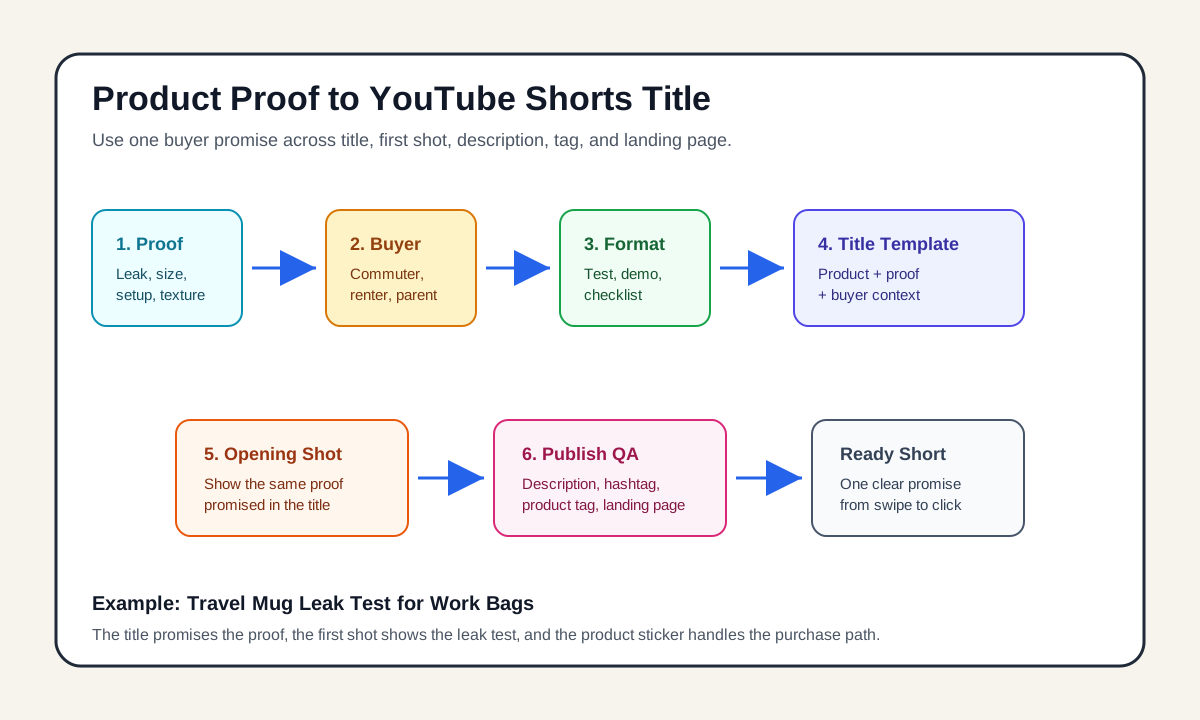
Why Product Video Titles Need a Different Template
Most ecommerce Shorts fail at the title level for one of three reasons. The title is too vague, too clever, or too detached from the buyer's actual question. A product video is not a creator vlog. It has a commercial job: make one product claim easier to understand, believe, and act on.
YouTube metadata guidance treats the title, thumbnail, and description as more important for discovery than tags. YouTube also recommends putting important words near the beginning because viewers may only see part of the title. For a product Short, those important words are usually the product type, problem, audience, or proof point, not the brand name.
That means the title should answer one of these buyer questions:
- What problem does this product solve?
- What proof will I see in the video?
- Is this for my use case, size, skin type, room, device, or routine?
- Is this a test, comparison, demo, setup, review, or checklist?
- What should I do next if I want the product?
The safest title template is proof-first:
[Product or buyer problem] + [proof/result] + [format/context]
Examples:
Portable Blender Ice Test: Smoothie in 30 SecondsPet Hair Remover Sofa Test: Before and AfterMini Projector Bedroom Setup: 3 Shots to CheckHydrating Serum Texture Test for Dry SkinDesk Lamp Eye-Strain Demo for Late Work
This structure is specific enough for search, clear enough for Shorts browsing, and honest enough to avoid the mismatch that causes viewers to swipe away.
Use the 4-Part Ecommerce Shorts Title Formula
The formula below keeps product video titles short without making them generic.
| Title part | What it does | Ecommerce example |
|---|---|---|
| Product or problem | Tells YouTube and shoppers what the Short is about | Pet hair remover, dry skin serum, travel mug leak test |
| Proof angle | Shows why the viewer should believe the claim | before and after, drop test, setup demo, 3 proof shots |
| Buyer context | Narrows the audience or situation | for apartments, for commuters, for oily skin, for small desks |
| Format signal | Sets expectations for the video | demo, test, checklist, comparison, mistakes |
You do not need all four parts in every title. Use two or three when the product is simple. Add the buyer context when the product works for a specific audience. Add the format signal when the hook could otherwise sound like a claim without proof.
Good:
Travel Mug Leak Test for Commuters3 Proof Shots for a No-Drill Shower ShelfDry Skin Serum Texture Test in 20 Seconds
Weak:
This Product Is AmazingYou Won't Believe ThisBest Product Ever
The weak versions may create curiosity, but they do not give YouTube or a buyer a clear topic. They also make the video work harder in the first second because the title has not framed the proof.
Match Title Intent to the Video Hook
The title and first two seconds should make the same promise. If the title says Leak Test, the first shot should show the bottle being turned upside down, shaken, packed in a bag, or compared with a wet control item. If the title says For Small Apartments, the first shot should show the space constraint.
Use this matching table before you publish:
| Buyer intent | Title pattern | First shot | CTA fit |
|---|---|---|---|
| Problem solving | [Problem] Fix with [product type] |
Show the problem in a real setting | Check size and color options |
| Proof seeking | [Product] [test/demo] |
Start with the most visual proof | See the full product details |
| Comparison | [Product A] vs [Product B] |
Put both options on screen immediately | Compare specs before buying |
| Use case | [Product] for [buyer context] |
Show the buyer context first | Choose the setup that matches your space |
| Mistake prevention | [Number] mistakes before buying [product] |
Show one mistake visually | Review the checklist before checkout |
This is where many ecommerce teams should connect titles to their product video storyboard template. The title should be chosen before final editing, not after export, because it determines which proof shot should open the Short.
A Working YouTube Shorts Title Template Library
Use these templates as starting points. Replace bracketed language with the product, proof, and buyer context. Keep the final title readable and specific.
| Use case | Template | Example |
|---|---|---|
| Product proof | [Product] [proof test]: [specific result] |
Insulated Cup Ice Test: 6 Hours Later |
| Before and after | [Problem] before and after with [product] |
Pet Hair Sofa Before and After with This Brush |
| Setup demo | [Product] setup for [buyer context] |
Mini Projector Setup for a Small Bedroom |
| Mistake prevention | [Number] mistakes before buying [product type] |
3 Mistakes Before Buying LED Desk Lamps |
| Comparison | [Product type] vs [alternative]: [decision point] |
Silicone Lid vs Plastic Wrap: Fridge Test |
| Objection handling | Is [product] worth it for [buyer context]? |
Is a Walking Pad Worth It for Apartments? |
| Feature proof | [Feature] test on [product] |
Waterproof Zipper Test on a Travel Pouch |
| Gift angle | [Product] gift idea for [recipient or moment] |
Desk Organizer Gift Idea for New Graduates |
| Quick checklist | [Product type] checklist before you buy |
Portable Blender Checklist Before You Buy |
| Shopping Short | [Product] demo with product tag |
Skincare Fridge Demo with Product Tag |
For a wider script workflow, connect the title template to a full product video script template. The title picks the promise; the script proves it.
Keep Product Video Titles Short, But Not Empty
YouTube recommends succinct titles because viewers may only see part of them. For ecommerce Shorts, that does not mean every title must be tiny. It means the first words should carry the most meaning.
Use this order:
- Product type or buyer problem.
- Proof format.
- Buyer context.
- Brand or campaign name, only if needed.
For example:
- Strong:
Travel Mug Leak Test for Work Bags - Weaker:
Our New MorningDrop Bottle Is Finally Here
The strong version starts with the product and proof. The weaker version starts with the brand's launch context, which usually matters less to a cold viewer.
If your brand name is already known, include it at the end:
Travel Mug Leak Test for Work Bags | MorningDrop
If your brand is not known, let the product proof earn the click first. The product tag, channel name, description, pinned comment, or landing page can carry the brand detail.
Description and Hashtag Rules That Support the Title
The title should not carry every keyword. YouTube description guidance recommends using one or two main words in the title and description, making each description unique, and using YouTube Analytics or Google Ads Keyword Planner for keyword ideas. For ecommerce Shorts, use the description to expand the buyer context and link the proof to the product page.
A simple description template:
See how [product] handles [proof/use case]. This Short shows [specific visual proof], so [buyer type] can decide whether it fits [situation].

Product: [name]
Best for: [buyer context]
Proof shown: [test/demo/comparison]
Hashtags can help connect the Short to a topic page, but they are not a substitute for a clear title. YouTube says hashtags can be added to titles or descriptions, and up to three from the description may appear by the video title. Use them sparingly:
- Good:
#shorts #homegadgets #productdemo - Weak:
#viral #fyp #mustbuy #bestproduct #sale #shopping #ecommerce
For ecommerce, the best hashtags usually identify the product category, use case, or platform behavior. Do not bury the title under hashtag stuffing.
Product Tags and Shopping Stickers Change the Title Job
If your channel uses YouTube Shopping, Shorts can show a product sticker for the first item in the tagged product list. YouTube's shopping guidance says creators can connect stores, tag products, and use Shopping analytics for tagged products. That means the title no longer needs to behave like a mini product page.
When product tags are available, let each element do one job:
- Title: name the proof or buyer problem.
- First shot: show the product solving that problem.
- Product sticker: handle the product click.
- Description: add context and search terms.
- Landing page: carry specs, variants, pricing, reviews, and shipping details.
Example:
- Title:
Travel Mug Leak Test for Work Bags - First shot: mug shaking upside down over a laptop sleeve
- Product sticker: exact mug variant
- Description: commuter mug, leakproof lid, stainless steel, 16 oz
- Landing page: color options, dimensions, cleaning, refund policy
This separation keeps the title useful without turning it into a crowded sales line.
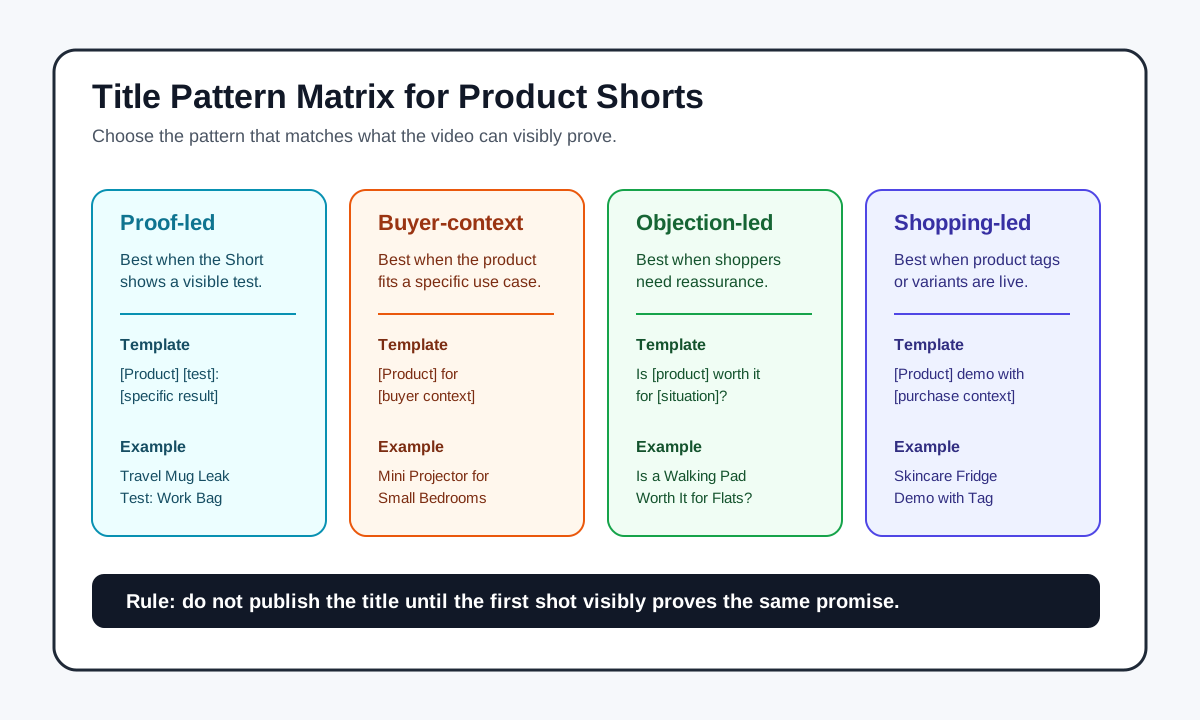
Test Titles Before You Scale Variants
YouTube supports title and thumbnail testing for eligible creators, allowing up to three title-thumbnail combinations and selecting the winner based on watch time. Even if your team does not have access to that feature yet, you can still use the same discipline.
For each product Short, draft three titles:
- A proof title:
Travel Mug Leak Test for Work Bags - A buyer-context title:
Best Commute Mug for Crowded Backpacks? - A mistake-prevention title:
Check This Before Buying a Leakproof Mug
Then judge each title against the video:
| Gate | Pass condition | Fix if it fails |
|---|---|---|
| Accuracy | The video visibly proves the title claim | Rewrite the title or add the missing proof shot |
| Front-loaded meaning | The first 3-5 words show the product or problem | Move brand, episode, or campaign text later |
| Buyer specificity | The title names a use case or decision point | Add context such as commute, desk, skin type, room, or gift |
| Thumbnail fit | The title and thumbnail are not repeating the same words | Let thumbnail show proof; let title name the decision |
| Landing page match | Product page supports the claim in the Short | Remove claims the landing page cannot support |
For paid creative, pair title tests with creative tests. The article on how many UGC video ads to test gives a broader testing rhythm for hooks, offers, and proof types.
Workflow: From Product Page to Shorts Title
Use this workflow when a product manager, media buyer, or content team needs title options quickly.
1. Pull the product proof
Start with the PDP, reviews, customer support tickets, and returns data. Find one proof point that can be shown visually. Good proof points include waterproofing, size, setup speed, stain removal, texture, storage capacity, compatibility, durability, or before-and-after difference.
2. Pick the buyer context
Name the shopper who should care. For example: apartment renters, gym commuters, new parents, dry-skin shoppers, pet owners, desk workers, Shopify store owners, or TikTok Shop sellers.
3. Choose the format
Pick one format from the template library: test, demo, comparison, checklist, mistake, setup, review, or before-and-after.
4. Write three titles
Write one proof title, one buyer-context title, and one objection title. Avoid writing five versions that only swap adjectives. Each title should test a different buyer angle.
5. Match the opening shot
Choose the first frame and first caption after the title. If the title says before and after, do not start with packaging. If the title says setup, start with the setup moment.
6. Build the publish package
Prepare the title, description, hashtags, product tag, thumbnail frame, pinned comment, and internal campaign note. If the Short is also being adapted from TikTok, use the repurpose TikTok videos for YouTube Shorts checklist to avoid carrying over platform-specific captions that do not fit YouTube search.
Examples by Ecommerce Category
Beauty and skincare
Vitamin C Serum Texture Test for Oily SkinSunscreen White Cast Test on Three Skin TonesHeatless Curls Before and After in 20 Seconds
Beauty titles should avoid medical claims unless the landing page and product documentation support them. Keep the title focused on visible texture, shade, routine, or application proof.
Home and kitchen
No-Drill Shelf Weight Test for RentersFood Chopper Onion Test: 10 Seconds LaterSilicone Lid Fridge Test: Spill or Seal?
Home titles work well when the proof is physical. The title should name the situation and the test, not just the feature.
Apparel and accessories
Travel Backpack Packing Test for Weekend TripsLeggings Squat Test: Fabric and Fit CheckCrossbody Bag Capacity Demo for Daily Carry
For apparel, titles should avoid overclaiming fit. Use material, capacity, styling, and use-case language that the video can show.
Electronics and desk products
LED Desk Lamp Glare Test for Night WorkMagnetic Charger Desk Setup in 15 SecondsMini Projector Wall Test in a Small Bedroom
Electronics titles should make the test conditions clear. If lighting, room size, device compatibility, or cable length matters, put that context in the description.
Common Mistakes to Avoid
Mistake 1: Starting with the brand name
Unless the brand has search demand, lead with the product type, problem, or proof. Work Bag Leak Test: MorningDrop Mug is usually stronger than MorningDrop Mug Is Here.
Mistake 2: Writing a TikTok caption as a YouTube title
TikTok captions can be trend-led, casual, or creator-led. YouTube titles need clearer discovery signals. If you reuse TikTok creative, rewrite the title for search and browsing.
Mistake 3: Making the title broader than the video
If the video shows one stain test, do not title it Best Stain Remover for Every Fabric. Use Coffee Stain Test on Cotton Shirt instead.
Mistake 4: Stuffing every feature into one line
A crowded title usually means the video has no single job. Split features across multiple Shorts. Use one title for leakproof proof, one for size, one for cleaning, and one for gifting.
Mistake 5: Forgetting policy and advertiser fit
YouTube advertiser-friendly guidance applies to titles, descriptions, thumbnails, and tags. Avoid misleading metadata, unsupported claims, shock language, or risky before-and-after wording. If the product requires disclosure, age limits, health disclaimers, or other guardrails, handle that in the script and landing page.
Publishing Checklist
Before publishing an ecommerce Short, check:
- The title starts with the product, problem, or proof.
- The title matches the first shot.
- The title is specific enough to stand alone in search.
- The description uses one or two main words and explains the proof.
- Hashtags are limited and relevant.
- Product tags point to the exact product or variant when available.
- The landing page supports every claim in the title.
- The video has a clear next step for the buyer.
- The title is not a duplicate of another Short targeting the same product proof.
For format constraints, review the YouTube Shorts specs for ecommerce product videos before export.
FAQ
What is the best YouTube Shorts title template for product videos?
Use [Product or problem] + [proof/result] + [buyer context]. For example, Travel Mug Leak Test for Work Bags is clear because it names the product, the proof, and the shopper situation.
Should I include the brand name in a YouTube Shorts title?
Use the brand name at the end if it helps recognition. If the brand is not already searched, lead with the product type or buyer problem and let the channel name, product tag, and landing page carry the brand.
Are hashtags more important than the title?
No. YouTube says the title, thumbnail, and description are more important pieces of metadata for discovery than tags. Use hashtags sparingly to clarify topic, not to replace a clear title.
How many title versions should ecommerce teams test?
Draft three: one proof-led title, one buyer-context title, and one objection-led title. If YouTube's title and thumbnail testing is available, use it. If not, compare retention, click-through behavior, and product clicks across similar Shorts.
Can I reuse TikTok captions as YouTube Shorts titles?
Usually not without editing. TikTok captions can rely on trend context, while YouTube Shorts titles should be more searchable, accurate, and front-loaded with the product or problem.
Sources Checked
- YouTube Help: Thumbnail and title tips.
- YouTube Help: Tips for video descriptions.
- YouTube Help: Add tags to your YouTube videos.
- YouTube Help: Find playlists and videos using hashtags.
- YouTube Help: Understand three-minute YouTube Shorts.
- YouTube Help: Get started with Shopping on YouTube.
- YouTube Help: Tag products in your content.
- YouTube Help: A/B test titles and thumbnails.
- YouTube Help: Advertiser-friendly content guidelines.
- ShopShot live blog sitemap and current pSEO ownership notes.